Why are we welded to welding?
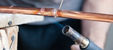
Hot work such as welding causes around 154 fires a year in England, costing £69.8m over the past decade and causing injuries, highlighting the need for safer alternatives.
Why are we welded to welding?
Every year the statistics are published: most recently, 154 fires in England each year caused by welding or cutting1, according to CE Safety analysis of ONS data.
The London Fire Brigade is pretty outspoken too. Its Guidance Note GN80, focused on Heritage and Buildings of special interest, lists a number of fire risks. First on that list? “Hot work activities”.
Analysis from insurance company Zurich’s claims data suggests that over the past decade the costs of hot work related fires have been about £69.8 million in total, so it’s hard to criticise such insurers who increasingly ask for stringent hot works permits and procedures.
It’s not only about money and damage to buildings. That same CE report records 32 casualties in the most recent incident figures, highlighting that hot work does not come without risk to people as well as property.
So why is welding still a thing?
The answer is that it isn’t really a thing in many European countries today. A report from 2021 showed four countries in Europe where press fittings account for 70% of the fittings market. It may be no surprise to see that Germany is out in front with press having 78% of the market. The UK sits way down the table, with press fittings providing just 24% of the fittings market. Why?
This has to be a cultural issue where training and specification is deeply rooted in habit and tradition. Press technology has been available for over fifty years in Germany with Viega launching its own Profipress system in the mid-1990s. It’s embedded in the training of new entrants to the industry and insurers in Europe tend to be less accommodating of a stubborn insistence on the use of welding.
A changing market
We are seeing a gradual shift in the UK with a number of factors driving change. For contractors, high on the list is the challenge of an increasingly cost-conscious market for businesses working on very tight margins. Competitiveness can be increased with a reduction in time on site and an initial investment in pressing tools is soon recouped as projects take significantly less time. The level of training and experience required to complete the joints is also reduced.
Where we as a company encounter resistance with the whole concept of press technology is in the level of trust. A properly welded joint is obviously effective, and an experienced welder will know how to work with different metals and pipe designs.
As a company we would point to the safeguards built into our components, and particularly the leak detection system. No-one is infallible and it is possible to miss a fitting in complex installation. Viega fittings deal with this risk by being designed to leak visibly when a system is tested at low pressure, allowing the contractor to fix the problem immediately before increasing to the operational pressure for the system.
Which risk do you pick?
Ultimately, the choice between welding and press technology will come down to a judgement of risk and cost. We see legislation and best practice guidance becoming increasingly averse to hot works on site and as decades of experience leave the industry, we can see an accelerating shift towards the adoption of modern, highly engineered mechanical solutions. At the end of the day, which risk is more attractive? The potential for a multi-million pound fire or the need to become familiar with a newer technology?
Sources
1. CE Safety analysis of ONS/fire statistics https://cesafety.co.uk/news/latest-figures-regions-with-the-most-hot-work-fires-2023-2025/
2. London Fire Brigade Fire Safety Guidance Note: Historic Buildings and Buildings of Special Interest GN 80 chrome-extension://efaidnbmnnnibpcajpcglclefindmkaj/https://www.london-fire.gov.uk/media/tryam5k3/gn_80_lf_format-2.pdf
Stay ahead of the curve and never miss what matters. Get the latest industry trends, product innovations, and expert tips delivered straight to your inbox. Subscribe now and stay one step ahead with Viega.


-2%3Athumb-ultrawide "Paul Cocks")